
"coffee tree pruning"
700 article(s) found

A brief introduction to the western valley of Costa Rican Coffee Goddess Manor
All the coffee trees planted in Costa Rica are Arabica coffee trees. through improvement, the quality of coffee beans is better and more stable. in order to facilitate picking, coffee trees are kept at a height of about 2 meters through continuous pruning. The coffee that people eat is the taste of the seeds in the fruit that are brewed in water. After picking raw coffee beans, the peel, pulp, seed film and sun exposure must be removed.

Coffee growing areas and major producing areas in Tanzania
Coffee is one of the main cash crops in Tanzania, ranking fourth after cotton, tobacco and cashew nuts, mainly sold to Italy, Japan and the United States. Coffee exports play an important role in the national economy of Tanzania. Tanzania's main coffee producing area is located at the foot of Mount Kilimanjaro, which is rich in volcanic soil.
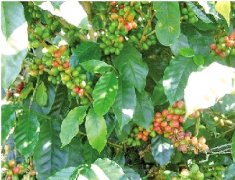
Yega Xuefei Sun Banki Maggie Coffee cooked beans Ethiopia G3
There are eight main producing areas of Ethiopian coffee: Ekempti, Limu, Illubabor, Djimma, Harrar, Teppi/Bebeka, Sidamo, Yirgacheffe. Ethiopian coffee is highly rated in Taiwan, especially Chinese people are particularly interested in the three famous producing areas of Ethiopia, namely Harrar, Sidamo and Yirgacheffe.

The taste of Costa Rican Fire Phoenix Sapphire Coffee beans treated by Grinding scale
Costa Rican Fire Phoenix Sapphire Coffee beans are grown in Costa Rica with Arabica coffee trees. Through improvement, the quality of coffee beans is better and more stable. In order to facilitate picking, coffee trees are kept at a height of about 2 meters by continuous pruning. The coffee that people eat is the taste of seeds in the fruit that are soaked in water. Pick raw coffee

Cultivation techniques of small Coffee in Yunnan Province Coffee Tree Disease Control
1. Coffee rust is the main disease of coffee, the most harmful, the damaged plants, light reduced yield, serious death. Coffee rust is mainly harmful to leaves and sometimes to young fruits and twigs. After the leaves were infected, many light yellow spots appeared at first and enlarged in the form of water stains, followed by orange-yellow powdery spores on the back of the leaves, and there was a light green halo around the disease spots, which gradually expanded or connected in the later stage.

The unique strong flavor of Costa Rican coffee introduces the Costa Rican coffee producing area.
All the coffee trees planted in Costa Rica are Arabica coffee trees. through improvement, the quality of coffee beans is better and more stable. in order to facilitate picking, coffee trees are kept at a height of about 2 meters through continuous pruning. The coffee that people eat is the taste of the seeds in the fruit that are brewed in water. After picking raw coffee beans, the peel, pulp, seed film and sun exposure must be removed.

What is coffee and tea? How does coffee and tea taste? What is the origin of coffee leaf tea consumption?
The most valuable part of the coffee plant is its cherry. After harvest and processing, it provides us with beans that have been baked, ground and brewed. But what about the rest of the factories? Usually, when a coffee plant is pruned or pruned, its stems, branches and leaves are thrown away. However, in some parts of the world, the leaves are picked and boiled to make coffee and tea. Coffee leaf tea consumption
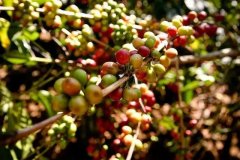
Yega Xuefei Sun Banki Maggie Coffee cooked beans Ethiopia G3 BenchMaji
There are eight main producing areas of Ethiopian coffee: Ekempti, Limu, Illubabor, Djimma, Harrar, Teppi/Bebeka, Sidamo, Yirgacheffe. Ethiopian coffee is highly rated in Taiwan, especially Chinese people are particularly interested in the three famous producing areas of Ethiopia, namely Harrar, Sidamo and Yirgacheffe.

An introduction to the boutique coffee flavor producing areas in the western valley of Costa Rica
All the coffee trees planted in Costa Rica are Arabica coffee trees. through improvement, the quality of coffee beans is better and more stable. in order to facilitate picking, coffee trees are kept at a height of about 2 meters through continuous pruning. The coffee that people eat is the taste of the seeds in the fruit that are brewed in water. After picking raw coffee beans, the peel, pulp, seed film and sun exposure must be removed.
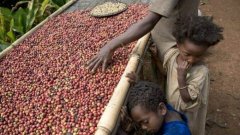
Characteristics of African coffee beans acting as agents of African coffee beans
There are eight main producing areas of Ethiopian coffee: Ekempti, Limu, Illubabor, Djimma, Harrar, Teppi/Bebeka, Sidamo, Yirgacheffe. Ethiopian coffee is highly rated in Taiwan, especially Chinese people are particularly interested in the three famous producing areas of Ethiopia, namely Harrar, Sidamo and Yirgacheffe.

The taste of Honduran coffee the method of altitude treatment I describe the quality of grinding scale
Honduran coffee taste altitude treatment method I describe the grinding scale quality introduction to the production of coffee, the geographical conditions of Honduras is no less than its neighboring coffee-producing countries such as Guatemala and Nicaragua, Honduras has 280000 hectares of coffee plantations, mainly small coffee plantations, most of which are less than 3.5ha, these coffee plantations account for the whole

Costa Rican Coffee Manor introduces Costa Rican Coffee Flavor characteristics Goddess Manor
The coffee trees planted in Costa Rica are all Arabica coffee trees. through improvement, the quality of coffee beans is better and more stable. in order to facilitate picking, coffee trees are kept at a height of about 2 meters through continuous pruning. The coffee that people eat is the taste of the seeds in the fruit that are brewed in water. After picking raw coffee beans, the peel, pulp, seed film and sun exposure must be removed.

Introduction to the flavor and taste characteristics of Costa Rican Coffee Manor
All the coffee trees planted in Costa Rica are Arabica coffee trees. through improvement, the quality of coffee beans is better and more stable. in order to facilitate picking, coffee trees are kept at a height of about 2 meters through continuous pruning. The coffee that people eat is the taste of the seeds in the fruit that are brewed in water. After picking raw coffee beans, the peel, pulp, seed film and sun exposure must be removed.

Introduction of varieties produced in Manor by Grinding scale method of Coffee beans in Honduras
The granules of coffee beans in Honduras are large in shape, uniform in size and glossy in color. In order to facilitate harvesting, farmers will prune the coffee trees to no more than 150 centimeters, because if they grow too high, they have to set up ladders to pick, which is not only time-consuming, but also may damage the trees by bending branches. As the ripening period of each fruit of the coffee bean is different, it is necessary to keep the coffee bean in good condition.

Flavor description of Pacas Coffee beans in Honduras introduction to the treatment of Grinding degree in Manor
The granules of coffee beans in Honduras are large in shape, uniform in size and glossy in color. In order to facilitate harvesting, farmers will prune the coffee trees to no more than 150 centimeters, because if they grow too high, they have to set up ladders to pick, which is not only time-consuming, but also may damage the trees by bending branches. As the ripening period of each fruit of the coffee bean is different, it is necessary to keep the coffee bean in good condition.

Introduction to the characteristics and Origin of Costa Rican Coffee Flavor
Costa Rica's main agricultural products, with an annual output of more than 2 million bags (60 kg packages), earn 250 million US dollars from exports, second only to pineapples and bananas. All the coffee trees planted in Costa Rica are Arabica coffee trees. Through improvement, the quality of coffee beans is better and more stable. In order to facilitate picking, coffee trees are kept at a height of about 2 meters through continuous pruning. The coffee that people eat is fruit.

Flavor description of Honduran Coffee introduction to the characteristics of varieties treated in the manor area
Honduran coffee flavor description taste manor area treatment characteristics of Honduran coffee bean particles are large in shape, uniform in size, uniform in color and shiny. In order to facilitate harvesting, farmers will prune the coffee trees to no more than 150 centimeters, because if they grow too high, they must set up ladders to pick, which is not only time-consuming, but also may damage the trees by bending branches.

Introduction to the characteristics of varieties with flavor and taste of Honduran coffee beans
From its independence in 1821 to 1978, Honduras has had 139 coups, making it one of the countries with the most frequent coups in Latin America. Ramon Bilda Morales of the Liberal Party won the election in 1957 as president. Oswald Lopez Arellano, commander of the armed forces, launched a coup instigated by the United States in 1963, overthrew the Morales regime, and was elected general in 1965.

Unique strong flavor of Costa Rican coffee the characteristics of the manor area introduce Huofenghuangzhuang
All the coffee trees planted in Costa Rica are Arabica coffee trees. through improvement, the quality of coffee beans is better and more stable. in order to facilitate picking, coffee trees are kept at a height of about 2 meters through continuous pruning. The coffee that people eat is the taste of the seeds in the fruit that are brewed in water. After picking raw coffee beans, the peel, pulp, seed film and sun exposure must be removed.
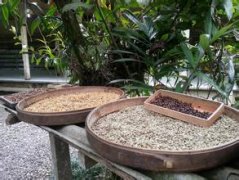
A brief introduction to the history and culture of the origin and development of high-quality Costa Rican Saint Roman coffee beans
The coffee trees planted in Costa Rica are all Arabica coffee trees, and the quality of coffee beans is better and more stable through improvement. In order to facilitate picking, coffee trees are kept at a height of about 2 meters through continuous pruning. The coffee that people eat is the taste of the seeds in the fruit that are brewed in water. After picking raw coffee beans, the peel, pulp, seed film and sun exposure must be removed.